Snippets

Ein Snippet ist ein kleiner Denkanstoss aus meinem Alltag.

28.09.26

Von 100 Stunden auf 36

A medtech company owned by private equity gave us a list of countries and asked where to acquire next. That answer normally takes 80 to 100 hours of research. Here's how we delivered it in 36 hours:

Those hours were spread across three days.

The ownership details matter because a company owned by private equity can only grow quickly by acquiring. So they needed a global market landscape to know where to look.

Day 1 is the brief and the market sizing.

The customer tells us exactly what they are looking for, and then we go market by market.

With AI support and our own data, we pull the size of each market, its growth rate, and the sources that back those numbers.

Day 2 is enrichment.

We take every market and fill it with the companies operating there. For each company, we build a detailed profile:

  • What they provide, and to whom
  • Their specialization
  • Their twist
  • Whether they have published annual reports we can pull from

Day 3 is the deck, where most of the trust is built.

We prepare the clickable presentation, then we validate everything by hand:

We click every domain to confirm it works, check the data behind each number, and fact-check the market size figures against the reports they came from.

Once I trust the results, I record a video where I walk through what we found and why it matters.

The customer gets that video, the full analysis, and an invitation to talk within the next 1 to 2 days.

We run the same process for other technologies too.

For a velocity sensor manufacturer, Day 1 started with adjacent markets:

Something built for airplanes sits close to the space sector, because rockets operate almost the same way.

The speed does not come from cutting corners.

Every figure is checked by hand, and every finding is explained by a person.
24.09.26

Fünf KI-Experimente bei WIKA

We spent the summer running five AI experiments at WIKA Group. Three delivered things the team could not do before, and two failed. The failed ones changed what I will build for every client after them.

It started in June with one talk about where AI actually stands. The team leaders and I ran an ideation workshop, and the CEO decided to run five experiments at once, each with its own idea owner.

The two that failed

Both were chatbots for finding information. The users tested the same job with Copilot on SharePoint, and it simply worked. That settled it for me. When a company already runs on Microsoft, I will not build them a search chatbot again.

The three that worked

I can only describe them at a high level, because the details stay with WIKA. One helps the developers write and check code. One works through the technical norms a certification depends on. And one puts 47,000 tools from a stack of supplier catalogs into a single searchable database, so finding the right tool takes minutes instead of half an hour.

The part I did not expect

At the September update, the CEO told me he had been calculating with zero return from the start. He is an engineer, and I suspect that, for him, an experiment fails until it doesn't. Three out of five showing real value was the opposite of what he planned.

The number I keep repeating

One analysis from these experiments costs $320 per run through a general agentic AI setup. The process we built for it does the same job, or a better one, for $4.20 per run. Agentic systems earn their price on complex problems that never repeat. The moment work repeats, it deserves its own process at a hundredth of the cost.

The experiments keep running through September, and the team is measuring what each one actually saves. I am curious how this has gone for others who ran their first AI experiments. Did the failures teach more than the wins?

18.09.26

Die Wette vor dem Aufschwung

German factory orders jumped 3.1% in June, and machinery orders alone rose 12.7%. After three to four hard years, the recovery might actually be starting. There's just one problem with the timing:

The moment the orders land, every bit of capacity goes into shipping what you already sold.

You won't have time to think about growth, and you'll just think about delivering.

So the bet on your next market has to be placed before the recovery arrives.

The work happens now, while it's still quiet.

Start with your own market. Understand very well how it is performing, where you grew, and where you didn't.

Then compare that against adjacent markets and those that are booming. Look at what's growing elsewhere, not just how your own sector feels.

And then ask whether your current market can still carry you, or whether you need to move into a sector you were never really in.

One of our clients manufactures specialized seals, and they're in the middle of exactly this exercise.

For them: some of their markets are booming, while others are growing slowly.

Right now they are looking at a rising sector they were never in. New for them, growing fast, and a place where their experience might apply.

Nothing is won there yet.

They are just scouting, but that is the whole point of doing it now.

17.09.26

Wer das Patent sieht, ist zu spät

Everyone assumes a patent filing is an early warning: spot it, and you see a competitor's next move coming. Then I started asking the people who do this for a living, and they all told me the same thing:

If you see the patent, it's already too late.

By the time a company files, they have already been working on that idea for months.

And even then, you don't see it right away. The patent office reviews it first and then issues its recommendation, so it stays out of view for a while longer.

By the time it's public, the head start is gone.

The earlier signal sits upstream, in the research. Look at:

  • Which research labs and universities a company collaborates with
  • What those labs publish: recent studies, use cases, and the new technology they're working on
  • Who leads those labs, and what that professor has published

That tells you where a company is heading long before anything reaches a patent office.

Patents still earn their keep in one way: in aggregate.

When you look at everything a company keeps filing, the patterns do show up. You can see where their focus is, where the money flows, and where they invest.

Zoom out further, and you see who dominates the patent landscape in a field.

So on its own, one patent tells you almost nothing.

Labs show where things are heading, and the landscape shows who dominates.

14.09.26

Die Stille ist das Signal

An electronics distributor we worked with watched orders quietly slow for months and blamed a difficult market. The real problem was something neither customers nor suppliers will ever tell you.

And the story he told himself was the easy one: "The market is just difficult, it's a few months, they'll come back."

They didn't come back.

By the time he figured it out, a competitor with aggressive pricing and a new product had already taken the demand.

Here is what that case taught me:

Nobody tells you when something is wrong.

Customers won't always tell you if they're unhappy or what they need. Suppliers sometimes stop reaching out simply because you're no longer their number one.

You can work with someone for years and only hear at the last minute that they can no longer deliver.

So the silence itself is the signal, and your job is to detect it before it costs you.

On the customer side, there's one method I trust most:

Build a cohort of customers who order at a steady rhythm. The ones buying every 30, 60, or 90 days.

When one of them drops out of that rhythm, that's the trigger to pick up the phone.

Call them and ask: "How are you doing? Are you happy?"

You'll immediately see it. Their business is struggling, a supplier made them a better offer, or they have other difficulties.

Maybe it's them, maybe it's you. Either way, you know when you get the signal.

The same discipline goes for suppliers.

Watch which ones you operate with, how they're doing, whether they recently raised prices, and whether they told you. Their health is a leading indicator of what reaches your business months later.

A difficult market gets the blame, but the silence does the damage.

11.09.26

84 Pilotprojekte, drei Überraschungen

We have run 84 pilots with manufacturing companies, and we never once failed to find valuable information. But the same three surprises keep showing up:

1. Nobody knows their own competitors.

We research a company's competitors, the information appears on the screen, and they say, "I didn't even know that they do XYZ." Two companies competing in the same space, and neither has heard of the other.

2. Very little of the decision-making runs on data.

So much of it is trial and error and gut feeling, in processes that are rarely questioned, even when the data that would back or challenge them is right there.

3. The fastest win is the sources nobody knew existed.

Every niche has a few tiny websites that write about that one topic and nothing else. Think of a site that only ever covers synthetic machine working fluids.

When we run a pilot, we identify those sources and present them to the client, usually within a week or two. The reaction is almost always the same: "I didn't even know those websites exist."

And one story that keeps me honest about all of this:

We worked with a US company that turns wastewater drinkable again. They asked for market information, financial data, and the latest academic research. We connected the APIs for the financials, pulled the academic publications, and built a beautiful demo on top.

Everything was ready, and then I was simply ghosted with no reply. We somehow didn't really get to speak to that person anymore.

We found everything they asked for, but we just didn't win the deal.

So when I say we never once failed to find valuable information, it is not a brag. It just describes the first half of the job.

Selling what we find is the second half, and we can still lose that one.

07.09.26

An wen verkaufen wir eigentlich?

A few months ago, I wrote about Donnacha Daly pausing his university career to work on Gopf full-time. He's back now, and what he left behind is a question that changed how we think about where to go next.

To whom do we actually sell?

Without him pushing us on it, we would have stayed in a niche that would never have given us enough traction.

He made us zoom out and ask who is actually willing to pay, and whose problem we solve.

So we reshaped our whole positioning. On the new website, you can now see three focus groups we would never have named on our own:

  • C-level executives
  • Strategic consultants
  • Private equity

We're still evaluating it all, but none of it existed six months ago.

He sees these things before we do because he meets industry decision-makers almost every day through conferences, speaking engagements, and his university lectures.

So he is always hearing the burning questions people ask, especially about AI and where the job market is heading.

The rest of us were often heads down in the operational rabbit hole, planning how to build this and that.

And then Donnacha would say: "But guys, we have the data. What if we simply sell data and the analytics layer to them?"

We'd ask: "Well, but how does that actually look?" And that discussion pulled us back into the bigger picture every time.

What we have now is a lot of Pandora's boxes opened, with many directions we could take and no shortcut to the answer.

The work ahead is the unglamorous part: talking to these different people, understanding their roles and their problems, and gathering the evidence to see where it makes sense to go.

He won't be in the office much anymore, but the connector role stays.

04.09.26

Welche Industrie zahlt zuerst?

A manufacturer develops a new PFAS-free coating, and no one can yet say which industry will pay for it first. In this video, I walk through how we answer that question in a week:

We start with the technology itself and lay out the fields where it could be applied.

For each of those fields, we pull the market size and growth rate, so you can see where demand is worth chasing and where the competition is already too dense.

Once a segment stands out, we map its ecosystem: the full supplier chain, every company in it, the role each one plays, and where a new player could differentiate. Every claim comes with the source attached.

It works the same way in the other direction, when your product is proven, and it's the market you don't know yet.

For a business development or R&D team doing this manually, that research costs weeks.

02.09.26

40'238 Datenpunkte und eine Frage

In two months, our pilot pulled 40,238 data points from 1,834 sources. Then a client asked the one question data alone can't answer: "So what should we do about it?"

He wasn't wrong to ask.

A competitor moves into your market, files a patent, and closes an acquisition. The tools hand you a list of it happening and call that a signal, but really it's just a news feed.

That's what we built the pilot to fix. It maps an entire industry and tells clients what each move actually means for their position.

Everything it finds feeds into a weekly report, which has been running since the 22nd of April.

Of those 1,834 sources, 122 are high-level niche sources we identified and trust.

Behind them sits an ecosystem of around 80 actors we modeled: institutions, startups, scale-ups, grown companies, universities, and research labs.

That's the whole map, live and updating.

Collecting 40,238 data points is the easy part. The real work starts when you ask what any of it means.

Could it be that 3M is moving into that field? Which players in the ecosystem are affected? How does this connect to everything else?

Someone used to have to sit down and figure all of that out by hand. Now we do that computational work with our frameworks and the AI, so the client isn't left staring at raw signals.

A recent example: a startup researching the structure of pineapple leaf fiber. On its own, it's a curiosity, but in context it's a signal about where bio-based sourcing is heading, and who it touches.

So what the client gets is:

  • These are the facts
  • This is how it fits the market
  • These are the questions you should ask yourself

And every conclusion is traceable. You can open it up and see exactly how the machine got there, all the way back to the source.

That way you spend your time building strategy, instead of validating information from the internet.

31.08.26

Die Antwort wird billig, die Verantwortung nicht

I have sat on the board of an energy company in Kloten for over four years. A model can now produce most of the analysis that reaches us, but it cannot do the one thing the meeting is for:

Stand behind the decision when it is wrong.

That is the shift I keep noticing. AI is making the answer cheap, but it's not touching the accountability for being wrong about it.

As models get better, better intelligence and automated admin work become harder to defend against. Anyone can buy the answer now.

What stays valuable is being the one who has to deliver an outcome, stand by a claim, and accept the consequences either way.

That sits outside the model layer. A better model does not simplify your operations, solve your regulatory complexity, or make you willing to carry the risk.

This includes what we do @Gopf

The intelligence part of my work is also being commoditized. Scraping, analysis, and reports are all getting cheaper. I pay this tax first, so I am not going to pretend it only happens to you.

And the frontier labs will not rescue you here.

When the CEO of one of them wakes up, the priorities are lawsuits, staying on the good side of the government, anticipating what other countries or markets will do, and raising enough capital to compete.

Taking on your liability is nowhere on that list.

Which is the part manufacturers miss about their own position.

You already own the hard part. You ship a physical product with your name on it, you stand behind the tolerances you warranty, and you carry the liability that rides on that machine long after it leaves your floor.

That is exactly why a better model does not disrupt you.

But look at everything around that accountability. The quoting, the research, the monitoring, and the paperwork. You apply almost no AI to any of it.

So the threat is a competitor who owns the same accountability you do and runs faster because they use the leverage you left on the table.

The question to carry into your next Monday meeting is this: what do we stand behind, and are we using AI everywhere that isn't that?

(Image credits to Julie Yoo)

28.08.26

Bauchgefühl mit Daten

A CFO I met recently is a part of a 70-person machinery company. He told me straight up: "We make our market analysis on gut feeling. We don't work with data yet."

I wasn't surprised.

I'd have been if he told me they backed everything with data.

What I hear instead from people running these companies:

  • "That market feels big, we should look at it."
  • "Nobody's really serving this use case, that could be us."
  • "A competitor moved into Poland, maybe we should be there too."

And that instinct is usually a good one.

It comes from decades of experience and more often than not it's pointing somewhere real.

The problem was never the gut feeling.

It was acting on it without knowing what the data would say, and believing that finding out would take forever.

In his mind, validating a hunch meant a strategy project: a consultant starting at 20,000 francs, Googling around for three months, handing back a slide deck.

So the gut feeling just sat there, unconfirmed for a year, sometimes acted on and sometimes quietly dropped.

Instead of a four-month project, he briefed me and 72 hours later had the full map of where it made sense to go and where it didn't.

The goal was never to replace his intuition.

Combine it with data, and that gut feeling becomes something you can build on instead of something you defend.

In the first week, you know which markets are worth looking at.

Within a month, you have the full competitive picture, who's already there, and a real plan for each one.

That's the difference. A gut feeling backed by something you can act on.

25.08.26

Wir sehen nur, was wir kennen

Put ten people in a room to decide a company's future. Some argue from experience, some from research. All of them hit the same wall, and it has nothing to do with how smart they are. That wall is why we built Gopf.

We can only see what we know.

If you have never heard of something, it will not pop up in your head. The smartest person in the room reads straight past the thing they never knew to look for.

This is where the machine helps.

It reads and classifies a huge amount of information very quickly, and it grasps a wider spectrum than any single person could.

It is a bit biased and might hallucinate a bit, but it still shows you things you never thought of or had already set aside.

Take a niche topic like data centers on the moon.

Right now, a handful of people talk about it. But when enough people start talking, politics and research follow, and suddenly a movement forms around what only outsiders were promoting a year earlier.

So you use the machine to collect the whole niche.

But as soon as you derive instructions for action, that is a different job.

We call it a decision support system. It throws everything that matters at you, backed by the evidence we have seen in the market. Then it stops.

We actually don't want the user to "click the button and accept it," as that is the good old way. We want the user to read it carefully and accept it

The machine only makes sure you saw it first.

20.08.26

6'000 Leute für die einfache KI

Microsoft just spent $2.5 billion, sending 6,000 experts to help companies deploy AI. If AI were as simple as everyone claims, why would they need 6,000 people to do that?

The answer is that the technology exists, but the business context does not.

Someone has to go in, understand what the company actually does, and then help model that work into the system.

That is the part no piece of software can do on its own.

And it is the part most CEOs can't do alone either.

From the top, you can't see where the real opportunities are hiding inside your own processes.

The way to find them is to watch the work.

You sit with the person who owns the problem.

You ask them how they work, what their process looks like, and what's the bottleneck.

Then you come back with concrete ideas.

Two companies have already asked us to run exactly this kind of engagement.

Compare that with the software-first approach.

No C-level will ever log in to a system and spend 12 hours configuring it just to see if it helps.

But if you say:

Let us spend two days with you, and we will present you with a full picture of where AI could help, which is a conversation people say yes to.

The forward-deployed engineer model is becoming the new front door because the missing piece was always the business context that makes the tool useful.

Microsoft just spent $2.5 billion to confirm it.

17.08.26

Der EU AI Act und die Grand Challenge

Three years ago, when the EU AI Act was still just a draft, my company sat in a room in St. Gallen and got grilled by four different groups of expert lawyers and technologists.

They wanted to know exactly how this law would hit us.

The event, called The Grand Challenge, was initiated and organized by Thomas Burri at the University of St. Gallen.

Lawyers, tech people, and experts from across the EU came together to assess how the Act would actually affect companies.

They went through everything with us:

  • Do you train your own models?
  • Do you use foundation models?
  • Do you work in education?
  • Do you work in medical?

We walked out with four separate formal assessments of our exposure.

The conclusion fits in one sentence:

As long as you don't train your own foundation model, where knowledge from the world is baked into probabilities, then you're more or less fine.

The burden sits with the ones who train and retrain the models: Google, Anthropic, Meta, and OpenAI, not the companies that simply use them.

For manufacturers, my read back then was that they only get pulled in if they train their own models, say for a medical device.

Most of them aren't doing that.

They want to optimize programming code for their machines. They're not suggesting people's therapies or building the next education program.

I'll be honest: that was my conclusion in 2023, and I haven't tracked every change since.

So take it as a starting point, not a ruling.

Which brings me to the news everyone is reacting to.

The deadline for high-risk obligations for standalone AI systems moved from August 2026 to December 2027.

For AI embedded in machinery and regulated products, the deadline moved to August 2028.

This is a runway to use, and every one of your competitors has the exact same extension.

So the real question is:

Who uses that time to build AI into their products and processes properly, and who just takes a deep breath and wastes it?

12.08.26

Wo kommen die Seniors her?

In 2023, three of my students split up at a career fair and visited 87 companies. At every booth, they asked the same question: any jobs in AI or machine learning?

Only 3 companies said yes.

They left asking a different question: what do we even apply for?

In the end, they took junior software developer roles and picked up machine learning along the way.

That seat was their entry into the field.

And that entry is now disappearing too.

Give a senior developer AI, and they get 30 to 50 percent more efficient. So companies ask a fair question: why hire a junior at all?

I understand the reasoning.

But juniors are the only place seniors come from.

You become one through years of experience and mistakes, sitting next to someone better than you.

Every junior seat cut today is a senior missing in five years.

I know because I sat in that seat.

After my apprenticeship, I started a front-end job.

On day one, they handed me a web design and said: make a web page out of this. I panicked.

A senior friend sat next to me, showed me how he worked, and we went back and forth.

Within six months, I was delivering nonstop.

Once I was stuck for four days on something as small as centering a div in CSS.

I dug through Stack Overflow and posted my own questions when nothing worked. When I finally solved it, I felt like a champion.

That is what really disappears.

The patience you only build by being stuck, and the time to actually get unstuck.

How do you sit with a problem for four days when everything needs to be done by tomorrow?

If a student joins a dev team today, there are barely any tasks left for them. The senior just says, "I can quickly close that."

I genuinely do not know how they will get their opportunity.

10.08.26

Die Schweiz ist produktiver, aber warum?

A new Microsoft study says Swiss AI users outperform the rest of the world on productivity. Proud Swiss moment, but I can't understand how.

The study surveyed around 20,000 AI users across 10 countries:

65% of Swiss AI users say they now produce work they couldn't have produced a year ago, compared to 58% globally.

Among organizations that have systematically embedded AI into workflows, that number rises to 83% in Switzerland.

And 84% of Swiss AI users treat AI output as a starting point, not a final answer.

But the study states the numbers without explaining what Switzerland actually does differently.

Do Swiss workers have better access to data? More money? Faster decisions? What is it?

The differentiation is clearly on the country level, but the study does not say what drives it.

The number that I find more honest is the one about leadership:

Only 24% of Swiss AI users say their leadership is clearly and consistently aligned on AI.

What does that even mean?

In my experience from talking to companies, the real number of leadership teams that genuinely know what they are doing with AI does not come close to 24%.

The study says Switzerland's AI advantage will only translate into lasting competitive impact if organizations close the leadership gap.

That might be true.

But the more interesting question the study does not answer is what Switzerland is doing differently in the first place.

I genuinely do not know. And apparently neither does the study.

07.08.26

Woher kommt der Strom?

For years, Switzerland's energy narrative was simple: go green, use only windmills and solar. I sit on the board of an energy company. Here's why that failed and what happens next:

For a long time, the government assumed our devices would save us.

Laptops and cars would get more efficient, so we would need less energy over time.

But the opposite happened.

Data centers, electric vehicles, and a growing economy meant demand was rising faster than anyone had planned for.

Switzerland's geography makes this harder than it sounds.

In winter, there is not enough sun for solar to carry the load.

There are almost no viable locations for wind turbines, and when you ask people whether they want one in front of their garden, the answer is always no.

Hydropower is good but not always guaranteed.

That leaves buying electricity from somewhere else, and already a significant portion of what Switzerland uses comes from French nuclear power plants.

Gas is being phased out politically, and dependency on Russian supply is no longer an option.

So the question becomes: where does the energy actually come from?

Nuclear was politically dead here for a long time, after disasters everyone was scared of.

Pushing a nuclear project is still hard today.

But research institutions and startups are quietly returning to the field.

My own view is simple.

Push renewables as far as it makes economic sense. Solar and wind, keep going.

But we need a backup plan for the day there is a blackout in Europe or the power from France stops coming.

On our own right now, we would be pretty screwed.

What I think happens next is the development of technology that fits inside a building and produces enough energy for a village or a canton.

Safer, more distributed, more manageable than anything we associate with nuclear today.

One of the downsides of nuclear is also the waste.

But I believe there will be better concepts for safely handling it and limiting the long-term harm it can cause.

05.08.26

Profitabel, als der Niedergang begann

Recently, a turnaround consultant told me: Every failing manufacturing company he works with was profitable when the decline started. He steps in when things stop working. So I asked him what they all missed.

The companies were niche, growing, and fully booked.

Their machines ran at capacity, and backlogs were stacked for months. So they optimized what was already working.

But then the market shifted.

Customers became price-sensitive. Competitors offered the same product cheaper. And the queue that felt infinite… disappeared.

The consultant remarked that "they never considered that the orders could stop."

From my side of the table, the pattern looks the same.

I sit in these conversations every week. Business is strong. The pipeline is full. Leadership talks about AI, innovation, new markets.

But when I ask what they've actually done: "We're looking into it." And almost always: "Did someone else already do this?" Nobody wants to go first.

I've seen one exception.

A CEO of a large Swiss retailer asked: "How will AI change our business, and what does it mean in numbers?"

We ran experiments across departments and measured outcomes. Within months, they created a full-time AI role.

They moved while business was still good and will most definitely reap the rewards.

03.08.26

Strategie als Erlaubnis

I've watched 20+ companies this year pay consultants to write their corporate strategy, and realized what nobody involved says out loud:

Companies don't pay for strategy. They pay for permission to do what they already wanted to do.

It usually starts in the boardroom.

The board hands management a direction: become greener, get more economical, or explore a new market.

Management now has to turn that into an actual strategy paper.

Writing one is intense, and many companies don't even know how to structure it themselves.

That's where the consultants come in.

They do the analysis and come back with two or three options, each with its upsides and downsides.

But the management picks the one it preferred from the start.

And if something goes wrong, there's a respected firm's name on the cover to point to.

Honestly, that's not unreasonable. If I were the manager, I'd want to steer it too.

Then the document gets celebrated. Everyone's relieved it's finally done. And then nobody speaks about it for three years.

What happens in those three years?

The company starts executing, and the execution runs into the real world.

You planned to enter a new market, but political instability made it impossible.

You set a direction, and a competitor moves in a way the document never anticipated.

The strategy was written at a high enough level that it couldn't account for any of it.

A strategy should give guidance.

But it has to stay a working document, something fluid.

Keeping it alive takes ongoing data: what sales is hearing in the market, what legal just flagged, and what regulations changed.

Maybe around 90% of that is public knowledge anyone can find, if you can process it fast enough.

The edge is the other 10%: the insider signal, the thing you heard, or the change you saw, fed back in while it still matters.

That's the difference between a strategy you commission and a strategy you run.

31.07.26

Die Nische der Nische

A few years ago in Zurich, a speaker who had spent 40+ years on nothing but hospital doors told us niches were too big. He had a name for what to search for instead:

The crack, meaning the niche of the niche.

He argued that on a global level, a niche is still a huge market.

Anyone can order almost anything from anywhere, so every niche is overcrowded.

You need to go deeper.

Take the medical equipment market as an example.

It’s huge. But take just the paper that wraps a syringe.

Six producers work on that one package:

  • One makes the raw pulp
  • One turns it into paper
  • One bleaches it
  • One adds the medical coating
  • One prints on it
  • The last brings everything together and inserts the syringe

Pick any one of them.

Say the paper coating specialists, and you have a real crack.

Now try to research a market like that.

Classic intelligence tools buy data from partners who collect what large media companies publish.

For Roche, Novartis, or Johnson & Johnson, that works perfectly.

They're on the stock exchange, they report every quarter, and everyone writes about them.

For a paper coating specialist in medical packaging, almost nobody publishes anything.

That's where most tools stop, and that's where we start.

We built Gopf – Strategic Intelligence with our own scraping infrastructure so the data doesn't end where media coverage ends.

We've run more than 84 pilots with manufacturing companies and never once failed to find valuable information.

29.07.26

Der ROI von KI

Manufacturing companies spend 100,000-200,000 francs on a single AI project with no guarantee of any ROI. Three experiments at 5,000 francs each would have answered that before the big bet.

The question I get asked the most is: What is the ROI on AI?

It can be calculated. Just not at the stage where a company is merely interested in AI.

It becomes answerable once you know what you want to optimize and what that costs you today.

So this is the homework:

  • Take one process that eats a lot of time and repeats constantly.
  • Split it into substeps, each with a clear, measurable outcome.
  • Then treat it like teaching an intern a complex task.

An intern would do one step, then check in: "Is this the right direction?"

You would then say, "Keep going," or look at the output and say, "No, redo it."

You have checkpoints, a supervisor, and quality assurance at every step.

By the end of that exercise, you know the complexity, where things go wrong, and how much time every step really takes.

Multiply that by how often the task runs per year, then add the people involved and the external costs.

Now you have the full calculation of what this process actually costs you today.

You would be surprised how many companies have never seen that number. They've worked the same way for 30 years and assume it's the only way.

Once you have that number, go back through the substeps and ask whether an AI can do each specific task.

You judge its output exactly the way you would judge the intern's.

It either can do the step or it can't. There's usually no in between.

Each of those little tests is an experiment.

And once you know where AI can help, run the same process with AI and measure the difference.

That difference is your return on investment, proven step by step instead of betting everything on one project.

Because if the process is unknown and the instructions are unknown, you can try whatever you want.

But you won't be successful.

27.07.26

Gopf im Schlössli Pop-Up

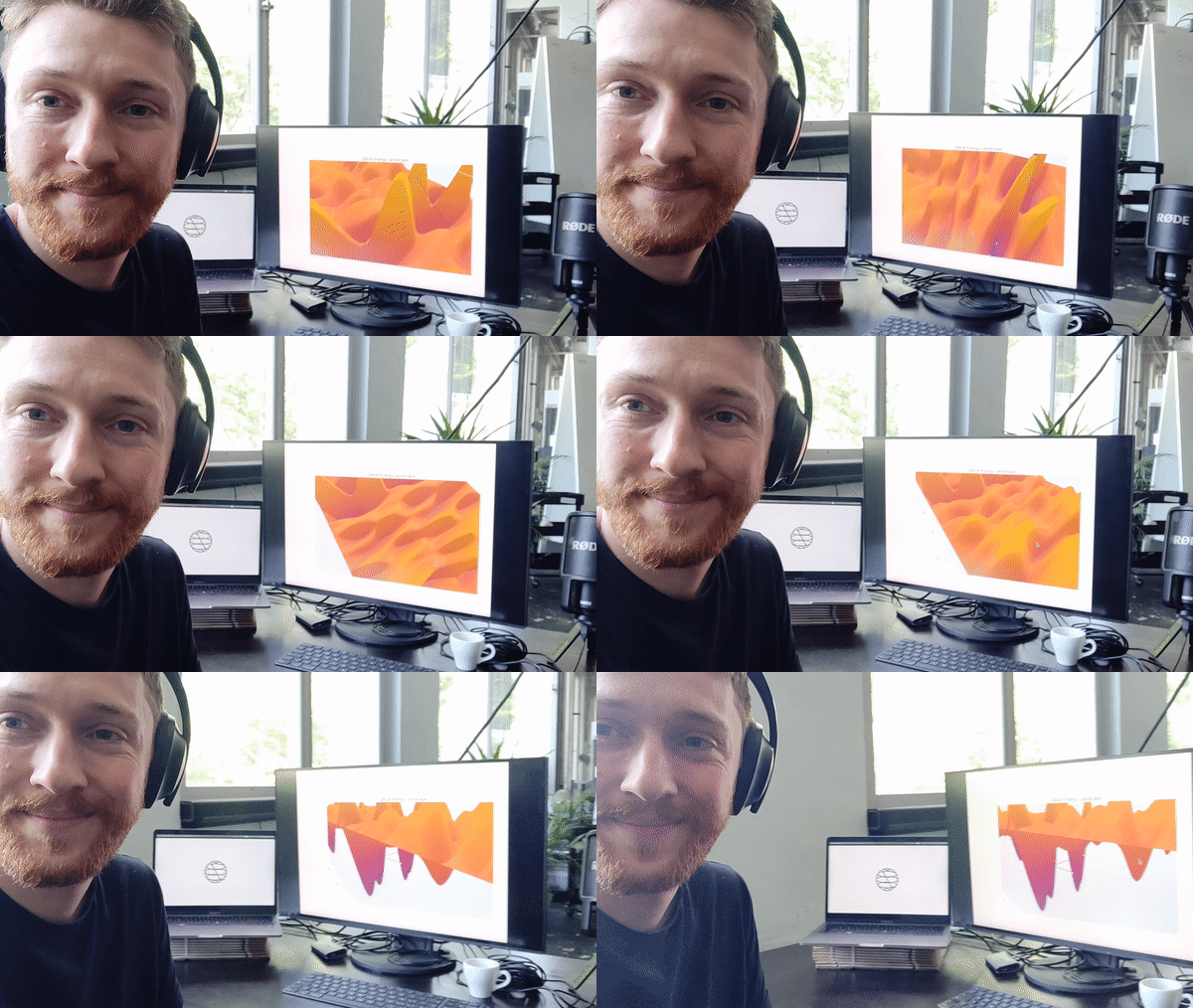
We're 4 people at Gopf – Strategic Intelligence, currently working out of a temporary space in Lucerne called the Schlössli Pop-Up. Here's a quick look inside.

Story behind the name: Gopf is what a Swiss person says when they're genuinely surprised. "Gopf, I would never have thought that."

We use it for pleasant surprises and unpleasant ones.

The pleasant reaction is the one we're building for every time a customer sees their market clearly for the first time.

By the end of 2027, construction on the Schlössli itself will be finished, and we're looking forward to moving in. Until then, this is where everything gets built.

If you're ever in Lucerne, swing by for a coffee. Two of us are trained baristas, so it comes with foam art.

24.07.26

Insight oder Signal?

Anything behind a paywall becomes public knowledge within 1 to 3 days. The moment a Gartner report names a leader, that leader posts it on LinkedIn.

That's the cycle, and it repeats with every release.

A new market study has been released, and its growth rate is cited in upcoming papers.

Or a new analysis drops, and its findings get refactored and recited on public platforms.

The information that was locked yesterday is quoted everywhere a few days later.

None of this makes paid research bad. A well-researched report can be excellent.

But on the day it's published, paid or not, it's still one source and one opinion.

No matter how well argued.

The value builds in the days after, when other people pick it up.

They cite it, critique it, and confirm it. Or they push back.

When many diverse voices start saying similar things, an opinion turns into substance.

So at Gopf – Strategic Intelligence, we cross-check and wait.

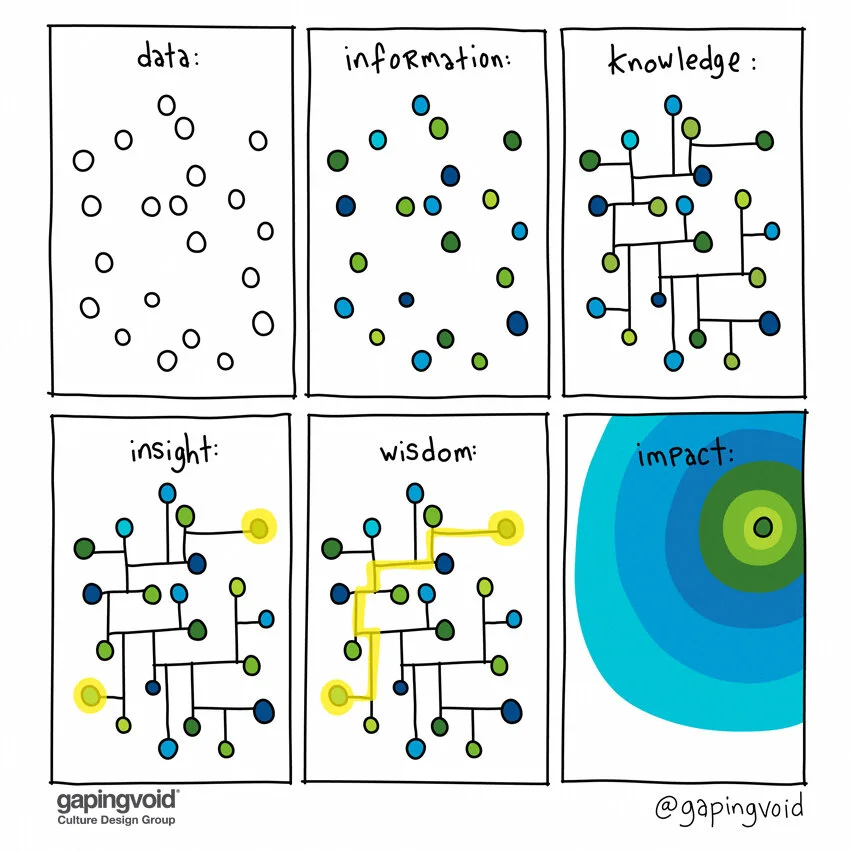
In our system, there is a difference between an insight and a signal.

A new regulation comes out in a country. That's one insight.

An import tax on that same market rises. That's a second.

Two weeks later, a competitor announces they're closing a facility there.

Each piece on its own is just information, but together, they become a signal: a narrative, with more and more evidence

And if it affects your competitor and your ecosystem, it most likely affects you too.

Confirmed means exactly that: multiple independent sources pointing the same way, each traceable back to the original.

You simply need to let that time pass, and the market does the validation for you.

22.07.26

Nichts zu lehren bei Swisca

I sat down with the 6 people who run Swisca, an 8-year-old milling company, to show them where AI is heading. But 20 minutes in, I realized I had nothing to teach them.

I've never met a manufacturing company this far ahead.

A couple of months ago, they started building with Claude Code.

Now their engineers write their own Python scripts and push them straight into the ERP they already run.

Every one of those used to go through their ERP vendor at 2,000 to 3,000 Swiss francs a request.

Now they build it themselves, faster.

These are engineers, not software developers.

And this isn't a couple of people experimenting on the side.

The whole leadership team uses AI every day, from the CTO to the head of sales, and they encourage everyone to do the same.

I ran through my usual intro on how the best companies actually use AI.

When I finished, the CTO said: "That's exactly how we already do it."

By the time I left, I had stopped thinking about their AI setup. I was thinking about their competitors.

If I were one of them, I'd be scared.

swisca ag is small and sharp, and every tool they build makes them faster. Their rivals are still treating AI like a chatbot they'll eventually get to.

I left convinced that they would not stay small for long.

20.07.26

Markt kennen, Markt betreten

When I posted about Brazil as an expansion market for manufacturers, a woman DM'd me: "Hey Kevin, nice post, but it's not that easy."

She was right.

For companies shipping goods to Brazil, freight costs and import taxes hit harder than most people expect.

And it's not just Brazil.

Swiss machinery and metal exports grew just 0.6% this year, and India is now the only major market still growing.

The numbers can point you to a new market, but not tell you how to get into it.

Shipping a machine from Germany takes six to nine months before it even arrives, and that's before you sort out residency, taxation, legal structure, and a local sales presence.

India has the same dynamic.

The market is clearly there, but actually getting in is a completely different story.

Knowing a market exists and knowing how to enter it are two completely different problems.

We can tell you there's a market, who's operating in it, and which of your competitors are already there.

We can also tell you where those competitors quietly backed off.

If one of them closed a research lab in Eastern Europe, that's a signal.

Something happened there, maybe a regulation, maybe no access to talent, and now you can dig in, understand why, and decide whether to avoid that market yourself.

That's the part most people never see, because they're only watching the markets that are growing.

The ones a competitor is retreating from can tell you just as much.

So I never tell anyone where to go.

I just give them the full map, the markets they were already weighing, and the ones they'd never have looked at, so they can decide with their eyes open.

17.07.26

KI-Workshop bei KIBAG

Two weeks ago, I gave a 4-hour AI workshop at KIBAG, one of Switzerland's largest concrete producers. We started the morning looking for repetitive tasks. The CEO ended the day talking about innovation.

Two hours on capabilities and limitations in the morning, two hours hands-on in the afternoon.

Their first instinct was that they didn't have many repetitive tasks.

And on the strategic level, that was mostly true.

But the deeper we dove, the more recurring work surfaced.

The biggest one was in their tender process.

When KIBAG bids on a construction project, there are hundreds of documents to go through. Someone has to open every single one, extract the information, and put together an offer.

Doing that manually costs them enormous effort today.

That was the aha moment. They saw the impact AI could have there, and they concluded it would be worth investing in.

But what struck me most came from the CEO.

He said he'd love a strategy, but it has to be hands-on. Not a huge piece of paper that just creates paper output.

And then one sentence at the end that I found remarkable:

"AI should enable us to be innovative."

Innovation, weighted more heavily than everything else.

We'll now support them in defining exactly that kind of strategy. And maybe soon, build a first experiment together.

Days like this are the most joyful part of my work. A new industry, new challenges, and a management team that commits once it sees the value.

15.07.26

60 Prozent planen, 17 Prozent tun

Gartner says 60% of companies plan to deploy AI agents in the next two years. But only 17% actually have. I talk to ~10 companies weekly, and here's why that gap exists:

Everyone defines agentic AI differently.

Ask a developer what an agent is, and you'll get one answer. Ask a C-level, and you'll usually get another: a chatbot you don't have to prompt.

And when the bar is that low, almost anything qualifies.

That tracks with what I actually see.

In every company I visit, what I actually see is people writing better emails with Copilot. Maybe one team is reviewing a legal document with it.

That's about as far as it goes.

So here's the definition I actually work with:

A real agent doesn't wait for you to prompt it.

It takes a goal and carries out the steps on its own, books the flights, cleans the inbox, and moves through a whole task without you holding its hand.

A chatbot that writes a better email is not that. It's a faster tool, but it's still something you operate.

The gap between those two things is enormous, and it's most of what that 60% are really counting.

Most companies aren't anywhere close to this.

The ones I talk to are still merging CRM systems, still stuck in ERP migrations, and still trying to roll out Teams and SharePoint.

That's the actual state of things.

They're not ready to run an agent that acts on its own, which is exactly why so few actually have.

13.07.26

Zwei Stunden Faktencheck

A contact of mine tests every market intelligence tool on the market. The newest one looked impressive until he spent two hours fact-checking a report and stopped trusting it.

He's never been impressed by any of these tools, and the new tool didn't change that.

That timing error is not a small mistake.

If a competitor is about to move, you still have time to react. But if they already moved, that window is gone.

Get the timing wrong, and you act on a situation that no longer exists.

He had to go back and check the sources himself, line by line.

And it wasn't just one mistake.

It was enough of them that he had to verify everything, which defeats the point of having the tool at all.

This is exactly the trap we spent years building against at Gopf – Strategic Intelligence.

When our system surfaces something, it checks when the data point was actually created, narrows to the right time window, and then runs a live check against today to confirm it's still true.

Every recommendation comes with its sources attached.

But even with all of that, the best tool isn't what wins this market.

There's a competitor out there right now whose tool has real flaws, and they might still beat us because they've figured out the go-to-market in a way we're still catching up on.

They went straight to management from day one, and that's the biggest thing we've realized at Gopf: the whole game is who you reach, and how fast.

And that's the battle now.

10.07.26

Kann man Gopf mit Claude nachbauen?

An investor asked me last week: "Could I rebuild Gopf – Strategic Intelligence with Claude?" He could copy the interface in a weekend. But the part nobody can copy took us 3.5 years to build.

His logic made sense on the surface.

Better models keep coming out, agents keep getting cheaper, and anyone with a credit card can spin up something that looks like what we built.

But the interface was never the product.

What sits underneath it is:

  • Custom web scrapers pulling niche data you can't get off the shelf
  • 2000 keywords per customer tracked across four search engines
  • 72 agents that score the quality of every piece of data that comes in

And every source gets saved into our own database.

We don't just link out to the internet and hope it's still there later. We keep the evidence.

Most of those hurdles have nothing to do with AI. The scraping runs into technical walls that no model swap fixes.

In fact, the AI is the cheap part.

We spend 240 francs a month on the models.

The expensive piece is the infrastructure underneath, just under 2,000 a month, because that's where the real work happens.

We engineered around the expensive models on purpose.

We can plug in open source where it makes sense, because the model was never the moat.

What we built is a data flywheel.

We generate data that develops itself and produces new data. You can't prompt your way into that.

So yes, you could rebuild the surface in a weekend.

Then you'd spend the next few years on the part that actually matters.

08.07.26

Das schnellste Pferd am kaputten Karren

Late last year, Forrester reported that only 15% of decision makers saw AI actually improve their bottom line. Businesses reacted by delaying 25% of their planned AI spending to 2027. And the analysts keep landing on the same cause.

The data was never ready.

It's like buying the fastest racing horse on the market, then hitching it to a cart with a missing wheel.

The horse can't move, but everyone stands around blaming the horse.

This isn't a new story.

We saw the same rollback with machine learning, and with data science before that.

Now the advice being sold is to add more horses: more agents, more tokens, more compute.

As if scale will drag a broken cart down the road.

It won't.

People treat AI like a database, something you can pull answers out of.

But really, it's a processing unit: it transforms whatever you feed it.

Put the best AI in the world on messy data, and you get messy results, just faster.

It's the same for manufacturers. Feed weak steel into the best CNC machine, and it breaks or fails to do what it should.

The raw material defines the quality of everything that comes after.

Care about that first, and the agents take care of themselves.

06.07.26

Ein Abend auf dem Zürichsee

Two weeks ago at Lake Zurich, I was on a boat and gave a speech to 40 people about how to actually bring AI into a business.

A former student of mine invited me to speak, and Sonio AG hosted the whole evening on the lake.

There were three speeches: One from Sonio on where AI is heading, one from AMD about the hardware side, and mine.

My message was simple: stay curious, run small experiments, and worry less about the AI itself than about the process you want to improve. Do that, and you usually find a tool that fits.

But the best moment of the whole night came later, over dinner.

I had the pleasure of inviting a few friends along.

Damian Nomura, building his own AI tool.

Andreas Wüst, running an agentic AI company for accounting firms.

Michel Luarasi, scaling a platform for creatives to work together.

And Dennis Garrn, who builds with us at Gopf – Strategic Intelligence.

Most of them aren't coders. Yet with tools like Cursor and Copilot, they now ship things that once took a whole team.

So when one of the speeches explained what an AI agent "means," we had a quiet laugh. We live it every day, limitations and all.

We all agreed on one thing: the question is rarely whether an agent can do a task. It usually can.

The harder question is whether it's worth building once you factor in the setup, maintenance, and failures.

But aside from the AI talk, what you really remember after an evening like this is the people. There's nothing better than familiar faces and good conversations.

Thank you, Sonio AG, for the platform and for hosting such an amazing event.

03.07.26

So günstig wie heute wird KI nie mehr

Fable 5 came back Wednesday evening. I used it for a customer market analysis, then checked the price: $50 per million output tokens, compared to $15 on the standard model.

We will never have as cheap AI as we have today.

The task went well, and I was able to merge one of my customers' market segments with my own research into a single hybrid document.

But the pricing is what kept me thinking.

Fable 5 is the most expensive model Anthropic has ever priced for general use, double the price of Opus and triple the price of Sonnet.

The launch followed a pattern I expect to see everywhere: dumping prices first, then a nice margin.

At launch, the model was included in the paid plans. By the time I could use it this week, every request is metered at the full rate.

The big players are still losing money on every token, and the only lever they have to fix it is to raise prices.

At the same time, each task now burns far more tokens.

Two years ago, you asked a model a question, and it answered for about 2,000 tokens, costing 2 cents.

Now the same question runs through an agentic system that delegates, retrieves, and validates. Suddenly, it burns half a million tokens and costs $1.25.

Roughly 60 times the cost.

That's why I only reach for the expensive model when the task really needs it.

For the simple work, open-source models already do a great job. You don't go on Fable 5 to translate an email or summarize a PDF.

And the next price increase already has a date.

One of the current Claude models runs on introductory pricing until August 31. From September 1, the standard rate is 50 percent higher.

The visual below is from an article I came across, not my own analysis.

It puts the whole equation in one line: even when the price per token drops, you still end up paying more.

01.07.26

Vier Tage allein mit den Kindern

My partner left for a 4-day yoga retreat, and I was alone with both kids for the first time since our daughter was born. My instinct was to solve it like a problem. I had no idea what I was walking into.

Since she was born, our daughter has only ever fallen asleep beside her mom.

So I did the only thing I could think of:

I packed our days with so much activity that they'd be too exhausted to fight it and fall asleep on their own.

The first night was tough, but after that, it got easier.

By the end, I wasn't even tired. It gave me energy, and it was a lot of fun.

I realized once again how massively underestimated care work is.

The energy it takes to do it 24/7, especially when you're the main caregiver.

Four days gave me a glimpse. She does this every day.

We defined our setup before we even had kids:

Monday to Thursday, I'm building Gopf while she's with the kids. Fridays I've got the kids, and weekends are for the family, with no work.

What people see on LinkedIn is me trying to build something. That's true.

But there's a whole engine behind it that makes the building possible, and the biggest part of that engine is her.

What those four days gave me was gratitude.

For the setup we chose, because it actually works, and for the person who makes it work every single day.

Ups and downs and all, the four of us are happy with what we've built.

And I know I couldn't do any of it without her.

29.06.26

Die Hälfte der Ingenieure ging

A machinery manufacturer stopped innovating in 2000. In 2018, half its engineers quit and started their own company. Eight years later, they're outbuilding the giant they left:

In a recent conversation with a colleague, I learned about an old company that built one machine extremely well, and the orders never stopped.

To management, it was a cash cow, and you don't fix what's printing money.

There was new research coming out, new materials becoming available, and a real chance to build something better.

They asked to build it, and management said no.

They were told there was no budget for it, and the message was simple: "Just keep producing what we already sell."

So they left.

A big group of them, all at once, and started their own company to build the machine they were never allowed to build.

Today, that spinout is 80 people. More than half of them from the company they walked out of.

Their technology is better than what the old company still sells, and now even the engineers who stayed behind are trying to join them.

The old company can still sell its machine. It just can't build it anymore, because the people who knew how are gone.

Half a team doesn't walk out overnight. The signals were there for years, in the people and in the market.

If management had been closer to either one, they could have reacted in time. They just didn't want to see it.

26.06.26

30 Seiten oder 30 Sekunden

For years, school rewards you for writing the perfect 30-page report. Then you walk into your first job, and someone says: "Just tell me what it is in 30 seconds."

This isn't a failure of education.

Academia is built to build academics, and it does that well.

When you do research, you show the full path: your hypothesis, your method, and your sources.

The goal is transparency, so someone else can replicate exactly what you did. Inside a university, that logic makes complete sense.

But business runs on different logic.

The company doesn't care how you got there. It cares whether it solves their problem.

I see this gap constantly because I teach at universities and run a company. Both worlds, same week.

Right now, I have a working student building a web scraper for us.

He presents his findings next week, and I already know how that conversation will go.

We won't spend much time on his methodology. We'll ask what the results are and whether we can run it at scale.

The practical output matters. The scientific path to get there, much less so.

The people who figure this out fastest stop presenting their process and start thinking about the person across the table.

They stop showing how clever the work was and start showing what it means for the person listening: how it makes them faster, cheaper, better off.

It sounds like a small shift, but it isn't.

It asks you to stop thinking about yourself and start thinking about the one across the table.

That's the part school rarely tests. And it's the part business pays for.

17.04.26

Chrome Extension mit Claude Code

Last month, I built a Chrome extension that pulls lead data from a LinkedIn profile and sends it straight to HubSpot. 240 leads enriched. 8 meetings booked. Total cost: $18. Here's exactly how I did it with Claude Code:

Step 1: Record what you want - I opened the Apple Voice Memos app on my phone and recorded a voice message. I spoke as if I were explaining it to another person. I described exactly what I wanted: I visit a LinkedIn profile, Extension opens in the sidebar, Click a button to extract the name, title, and company details, Send it straight to HubSpot. The more specific you are here, the better the output.

Step 2: Set up Claude Code - I opened my terminal, created a blank folder, and started Claude Code inside of it. I said: "This is a blank, empty folder. I want to work on a new project." Then I pasted the full voice memo and switched to planning mode. Claude Code has a Supabase plugin that helps generate a full project plan. I reviewed every step of the plan before moving forward.

Step 3: Build the first version - Once the plan looked right, I told it to build the first version. It worked for about five to ten minutes. Then it told me how to install the extension.

Step 4: Test and iterate - From there I tested it, found bugs, added features, removed things I didn't like, gave feedback. I also have Git running in the background tracking every version. So when Claude makes an error, I can always roll back to what I had before. Eight months ago, this process used to take a lot of back and forth. Now it's straightforward.

The results: Manually entering those leads at 3 minutes each would have taken me 12 hours. With the extension, about 30 minutes. It also replaced two subscriptions that would have run me $80 a month. You don't need to be a developer to build your own tools anymore. You just need to be specific about what you want.

17.04.26

Der unsichtbare Wissensträger

A few weeks ago, I had a call with a sales director. He said: "Our entire market intelligence is basically one person. He retires in two years. That's why we're looking for a solution." You could hear the panic.

I didn't show a demo. I just asked him to walk me through what that person actually does. It's always the same profile. Someone who's been in the industry for 20+ years, knows everyone, and has relationships across competitors, suppliers, and former colleagues. They go to trade fairs and don't "network". They just walk around and talk to people they've known for decades. They sit down for a coffee and ask: "How's business going at your end?" And somehow, they know everything that matters.

Inside the company, they're the default answer. Any question about the market: "Go to him." But the problem is that none of this is written down. It's not in a system, database, or even structured anywhere. It's in one person's head, and I've now seen this at multiple companies.

What happens next is predictable. The senior person leaves. They hire someone junior who is smart, capable, and motivated, but starting at zero. They have no network, context, and intuition for what signals actually matter.

I've now had this exact conversation with multiple companies. They all have the same question at the end: "What do we do when this person is gone?" No one has a real answer yet.

15.04.26

Sichtbarkeit beginnt ausserhalb der eigenen Mauern

At 20, I worked at a Swiss watch manufacturer. The owner had designed a new buckle and sent the plans to a factory in China to build a prototype. Before the prototype even came back, one of the employees was walking through a black market in China. He found the buckle fully assembled, already being sold.

That was the first time I understood how little visibility you actually have. You can own the patents and control the process. But it doesn't matter. If you're not actively watching what's happening outside your walls, you're blind.

Two observations from this job: 1. Information moves faster than you think. 2. The signals that matter are rarely visible in the places people usually look.

I kept seeing the same pattern in every role after that. The questions were always the same: What are competitors doing? Where is the market moving? How do we respond? The problem was never the question, but the lack of visibility.

That's why I started building Gopf – Strategic Intelligence to actually make sense of the signals that are already there.

13.04.26

Zwei Schuhverkäufer

In the 1900's, two British salesmen land overseas to sell shoes. The first telegraphs Manchester: It's a disaster, nobody here wears shoes. The second writes: This is the biggest opportunity of my career.

I heard this story on a TED talk from Benjamin Zander last month and couldn't stop thinking about it. I had the exact same moment six months ago when I realized almost no one in Swiss manufacturing has strategic intelligence. Most people hear that and think: must not be needed. I hear it and think: this market is wide open for opportunity.

For decades, Swiss manufacturers didn't need to compete. Then tariffs closed the US. Conflicts disrupted the East. Swiss currency got so strong that exports barely make sense.

Last week, three different companies called me asking the same questions: What does the Brazilian market look like? Where else could we go? Where could we gain market share?

Those questions are buzzing in every boardroom right now. And almost none of them have the infrastructure to answer it. The gap is massive. And I'm the second salesman in this story.

13.04.26

Das ICP-Dokument, das nie fertig wird

I've been rewriting the same Ideal Customer Profile document for 2 years. It's now 22 slides, a custom tool, and a full sales dashboard. And it's still not finished.

Most founders define their ICP once: Company size, industry, and job title. Done. But we went deeper. The job isn't just functional. It's emotional: "I don't want to look wrong in front of the board." "I don't want to defend my work every time."

That's where buying decisions actually happen. So we stopped talking about features and built everything around the job.

Two years in, and it's still evolving. I don't think it will ever be finished because your customer isn't static, and if your ICP is static, it's already wrong.

13.04.26

Das Innovationsparadox

A few years ago, a public administration hired me to bring them innovation. The Director, Deputy Director, every Departmental Head in the room. "Kevin, we need something new. Our processes are too slow. Bring us ideas."

So I proposed a Machine Learning based document processing automation. Controlled. Safe. Completely standard outside of public institutions. The room went silent. Then someone said: "No. Not that kind of innovation. No Machine Learning. No automation." Another voice added: "Can't we do something more... innovative?"

This is the paradox I see across organizations. They want innovation. But the second question is always: "Can you prove someone else already did this?" That's not innovation. That's replication.

Real innovation means taking the first step where nobody has gone before. It means accepting a real chance of failure. Most companies say they want that. But very few actually do.

13.04.26

Drei Unternehmen, eine Lektion: Distribution

In the last 12 years, I've built three different companies. The first two failed because I was obsessed with the wrong part of the business.

The first was a software development agency. Great product, but we had nobody who could get it into the right hands. Distribution killed us. The second was a web store. The prices were never going to be competitive. Distribution killed us again.

With Gopf, I was building serious technology. We shipped feature after feature. Customers would see it and say "oh, nice, super cool." Then they wouldn't use it. We gave them a platform and expected them to find the value themselves.

First-time founders fall in love with the product. Second-time founders fall in love with the problem. Third-time founders figure out that none of it matters without distribution. I needed all three to learn that.

06.04.26

6.7 Millionen Datenpunkte pro Jahr

I was on a call with three people from Dow Jones. They opened with: "Welcome, Kevin. Today we'll walk you through how to access our data." I told them I didn't need that. I'd already retrieved two million data points and processed them.

The sales rep finally spoke. "Kevin... I'm sorry, but this is something we've never experienced. Our customers usually need six to nine months just to learn how to retrieve data from our API."

The world's largest data providers are built for the world's largest companies. But if you need to know who your real competitors are in a specialized manufacturing niche in China or Brazil, their systems simply don't go deep enough. When I asked other providers about that gap, the answer was always the same: "Nobody needs that." Our clients strongly disagree. So we built our own infrastructure. 6.7 million data points a year. 18.5K a day.

01.04.26

Google hat uns angeheuert (April Fools)

Google just hired us to fix Google Alerts. Last week, their VP of Product flew me to their headquarters in Mountain View to show their engineering team how far behind they really are.

I opened Google Alerts in front of the entire team. Typed in "Google Cloud Service Competitors." Three results, and two of them were from 2021. The room went silent. Then I opened Gopf. 47 relevant signals in 10 minutes.

My final recommendation was simple: Shut it down. Redirect all users to gopf.com.

PS: Happy April 1st!

27.03.26

Dolphins vs. Whales

Last month, a prospect got on a call with us and said: "Wait, you've already set everything up? Our competitors and market data are already in here?" We hadn't even signed a contract yet.

The typical approach in strategic intelligence: You get access to a platform, you're told there's "all the data in the world", then you're asked to learn the query language and build everything yourself.

We take the opposite approach. Before the real work even begins, the market is already mapped, competitors are already tracked, relevant data is already structured.

I often compare it like this: They are the whales. We are dolphins. The whale has the size. But the dolphin has speed.

27.03.26

KI-Experimente in Kriens

Last Thursday, 60 city employees packed an AI fair in Kriens to see seven experiments we built in nine months.

We started with a workshop. 14 ideas came out of it. The team voted. 7 made the cut. Each experiment followed the same process: Interview the idea giver, define the problem, build a prototype, test it.

A financial forecast planner: Worked. A chatbot for citizen services: Worked. Automatic meeting transcription: Didn't work. Two legal document research tools: Both worked. Recycling bin route optimization: Too complex. A web scraper detecting unregistered hotels and Airbnbs: Worked.

Here's what I'm still figuring out: how do you keep that momentum alive once the experiments end and the day-to-day takes over again?

27.03.26

Die Halbwertszeit von Daten

A few months ago, a client told me they had ten years of market data stored and were ready to finally put it to use. They thought they were sitting on a gold mine. I looked at it and told them they'd need to start from zero.

The most important thing to understand about data is that every data point has a time to live. The moment you capture a piece of information and use it, that's when it's most valuable. But the longer it sits in a system untouched, the more its value declines. Eventually it reaches a point where the value is zero. And after that, it actually has negative value to you.

The companies with strong data quality are the ones where every data point serves a purpose in the business. Everyone else eventually faces the same realization: They've been storing information for years without knowing why.

20.03.26

Voice Cloning mit 5 Sekunden Audio

Last week, I cloned my own voice with 5 seconds of audio and an open-source tool I found on LinkedIn. Then I sent a voice message in fluent Finnish to my partner's family in Finland.

Honestly, I was just as surprised. I knew voice cloning was possible. But I didn't expect it to be this easy.

There are already cases where people cloned a CEO's voice, called the CFO, and pushed through fake payments. After testing this myself, I sat down with my parents. We agreed on something simple: If I ever call asking for money urgently, don't act on it. Instead, call me back, and ask for a specific word only we know.

AI is amplifying old risks at a completely different scale, and most people aren't aware of how accessible this already is.

20.03.26

Made in Europe

The EU is drafting a "Made in Europe" policy. 70% local components required for electric vehicles. 25% for aluminium. New conditions on any foreign investment over 100 million euros.

Knowing that a regulation exists is very different from understanding what it actually means for your business. At the operational level, the real questions start: What does this mean for our supply chain? If we currently source from Asia, how much would we need to shift back to Europe? What would that cost?

Once signals are configured properly, companies don't just know what's happening. They understand what it means for their current strategy.

20.03.26

Mein erstes Data Science Projekt

In 2015, I landed my very first data science project. The client was a clothing retailer. We confidently told them that if they gave us their data, we could analyze it within 40 hours and quickly identify ways to save money. Then we received the data, and spent the first 40 hours just trying to understand it. Three months passed. When we finally came back, the client said: "We already knew this."

That first project taught me three lessons I still follow today: 1. Never promise results before you've actually looked at the data. 2. Don't disappear into a rabbit hole. Stay in contact with the client. 3. Always show something within two or three weeks, even if it's just a rough prototype.

20.03.26

Vom Hörsaal in den Verwaltungsrat

A few years ago, I started teaching data and AI at universities. After one lecture, someone invited me to speak at a private lunch. About 1.5 years later, he reached out. "I'm the CEO of an energy company near Zurich. We're looking for a new board member."

At that time, I wasn't even 30. I didn't understand the energy sector. But I said yes. Today, almost four years later, it's one of the most interesting roles I have.

Looking back, the biggest lesson was that you don't need to fully understand something before saying yes. Curiosity is often enough. The rest you figure out along the way.

20.03.26

Was ist KI? Die Frage, die alles blockiert

Two years ago on my 35th birthday, I was standing in Zermatt in front of 24 executives. Before I could say a word, someone called out: "Kevin, just tell us. What is AI?"

I didn't give them one. Every person in that room had a completely different picture of AI in their head. If I start with a definition, I lose half the room.

So I asked one question instead: What problems are you actually dealing with? Because once the problems are specific, you can actually work with them. And most of the time, the answer isn't even AI.

The word AI got expensive. Not because the technology is expensive. Because the confusion is.

20.03.26

CHF 4.00 auf dem Konto

There was a morning in early 2025 when I checked my private bank account. I had CHF 4.00 left. On my way down the stairs to the office, our landlord stopped me and said we would have to leave the apartment within a year.

We cut our salaries in half. Then we stopped paying ourselves entirely. By January 2025, we had to let go of almost the entire team.

The morning I saw CHF 4.00 in the account, I sat for twenty minutes asking myself: What is the single most important thing I can do today? The answer was sales. Those calls led to meetings, projects, revenue. Today we're cash-positive again.

When money is available, you try ten different ideas. But when money is almost gone, you focus on the one thing that actually matters.

20.03.26

400-500% günstiger, gleiche Qualität

Last year, I showed a Swiss manufacturer their competitors' pricing for the first time. The room went quiet. The price difference: 400-500% cheaper. The quality difference: nearly zero.

We scraped 8 Asian manufacturers producing the exact same product. Same machinery. Same material mix. A fraction of the cost. The only difference was their location.

The biggest risk isn't a competitor you're watching. It's the competitor you don't know exists.

20.03.26

Von der Zeitung zum Algorithmus

Not long ago, one of the biggest strategic intelligence companies in Europe had someone sitting in their office, manually highlighting foreign newspapers with a marker. The newspapers were shipped internationally and arrived two or three days later.

When we started building Gopf, we asked a different question: What would this look like if we designed it from scratch today? We focused on three things: Speed (operational in under an hour), Niche data (custom sources others don't cover), Privacy and ownership (every customer runs their own instance).

20.03.26

Experiment statt Projekt

When I approach a company, I never pitch a project. The moment you say "project", people shut down.

Instead I ask: "Would you mind running a quick experiment? 3 weeks, maximum of 10,000 CHF." An experiment is different. It can fail. That's the whole point.

One of our manufacturing clients started exactly this way. It showed that a process taking four months could be reduced to one week. Today, that change saves them six figures every year.

If you make the first step small enough, curiosity usually wins.

20.03.26

Blinde Flecken und Co-Founder

Before founding Gopf, I had been doing project-based consulting work. I sat down and thought about what I could bring and what I was missing.

The first was development. I'm not a coder. So I needed a technical co-founder. That was Marc Bravin. The second was my mindset. I needed someone who thought internationally from day one. That person was Donnacha Daly.

Being honest about my own blind spots and finding the right people who fill them is still my best decision.

20.02.26

Vom EMBA-Hörsaal zur Bühne

The first time I walked into an Executive MBA classroom, I was the youngest person in the room. I could feel the skepticism: "What is this young guy going to teach me?"

Then I realized that nobody was there for theory. They were there for real-world experience. So I changed my mindset. Instead of trying to teach, I focused on sharing what I had actually seen and done.

The biggest career shifts rarely are planned. They start with curiosity and require discomfort. And they reward the people who keep going anyway.

18.01.24

Konfabulation

Ich habe gerade einen faszinierenden Blogbeitrag von Beren Millidge entdeckt, "LLMs confabulate not hallucinate".

Er bietet eine faszinierende Perspektive auf KI-Sprachmodelle! Millidge beleuchtet, warum "Konfabulation" ein treffenderer Begriff als "Halluzination" für die gelegentlichen Ungenauigkeiten von KI wie ChatGPT ist.

Diese Analogie zur menschlichen Psychologie ist ein echter Augenöffner! Sehr lesenswert für KI-Enthusiasten und Fachleute.

Hier geht's zum Beitrag: https://www.beren.io/2023-03-19-LLMs-confabulate-not-hallucinate/

06.02.23

Semantic Workflow

Semantische Workflows beziehen sich auf eine Reihe von Natural Language Processing-Aufgaben oder -Prozessen, die durchgeführt werden, um Bedeutung oder Wissen aus geschriebenem Text zu extrahieren.

Zu diesen Aufgaben gehören unter anderem Textvorverarbeitung, Tokenisierung, Part-of-Speech-Tagging, Named Entity Recognition, Coreference Resolution und Sentiment Analysis.

Die Schritte eines semantischen Workflows können je nach spezifischem Anwendungsfall variieren, aber im Allgemeinen können die folgenden Schritte befolgt werden:

  • Vorverarbeitung von Text: Bereinigung und Normalisierung von Textdaten, z. B. Umwandlung in Kleinbuchstaben, Entfernen von Stoppwörtern, Interpunktionen usw.
  • Tokenisierung: Zerlegung des Textes in kleinere Einheiten, sogenannte Token. z. B. von Absätzen zu Sätzen und von Sätzen zu Wörtern.
  • Part-of-Speech-Tagging: Zuweisung eines POS-Tags zu jedem Token auf der Grundlage seiner Rolle im Satz (z. B. Substantiv, Verb, Adjektiv usw.).
  • Erkennung von Entitäten: Identifizierung und Extraktion von Entitäten wie Personen, Organisationen, Orten usw. aus dem Text.
  • Auflösung von Koreferenzen (Coreference Resolution): Erkennung, wenn sich zwei oder mehr Erwähnungen in einem Text auf dieselbe Entität beziehen.
  • Stimmungsanalyse (Sentiment Analysis): Bestimmung der im Text ausgedrückten Stimmung, z. B. positiv, negativ oder neutral.

Diese Schritte werden in der Regel nacheinander durchgeführt, wobei die Ergebnisse eines Schrittes als Input für den nächsten dienen.

Das Endergebnis des semantischen Workflows ist eine strukturierte Darstellung des Textes, die eine weitere Analyse und Wissensextraktion ermöglicht.

02.12.22

Der Bund setzt sich Ziele zum Einsatz von Data Science

Der Bund setzt sich Ziele zum Einsatz von Data ScienceTLDR* Gemeinsame Sprache und Verständnis als Grundlage* Verständnis schaffen, was Data Science ist* 4 klare Stossrichtungen und Massnahmen* Zielbild transversales «Ökosystem Datenwissenschaft»Etwas mehr ins DetailFür die Bundesverwaltung bedeutet die Datenwissenschaft: «Menschenzentrierte und vertrauenswürdige Datenwissenschaft unterstützt das Gemeinwohl und die Staatstätigkeit»Zu den Stossrichtungen gehören Vertrauen in datenbasierte Entscheidungsunterstützung zu schaffen, Bewusstsein und Kompetenz aufbauen, technische Zugänglichkeit und Verfügbarkeit zu erhöhen und Synergiepotenzial auszuschöpfen und gemeinsam Herausforderungen zu bewältigen.Folgende Hebel wurden definiert:1) Grundprinzipien fördern, verständlich machen und festigenMit einem «Data Science Oath» oder «Data Science Code of Conduct» werden Rahmenbedingungen gesetzt, wie mit Daten umgegangen wird. Diese orientieren sich an den «Leitlinien KI für den Bund».2) Gouvernanz zur Datenwissenschaftsstrategie klären und etablierenIm Rahmen der Gouvernanz werden Rahmenbedingungen geschaffen, die es erlauben effizient und effektiv mit Daten zu arbeiten. Dies bedeutet ebenfalls sämtliche Akteure mit einzubeziehen, sowie Prozesse und Organisationen zu schaffen, welche diesen Prozess unterstützen.3) Transversales «Ökosystem Datenwissenschaft»Ein transversal ausgerichtetes «Ökosystem Datenwissenschaft» bedeutet, dass die entsprechenden ethischen, technischen und organisatorischen Voraussetzung geschaffen werden, um Optimierungen, Innovation und spannende Use Cases mit Daten zu ermöglichen.Massnahmen:Das Schaffen einer gemeinsamen (Daten-)Kultur, resp. des entsprechenden Wissens und Austausches in Bezug auf Daten. Weiter gilt es Talente und Fähigkeiten zu fördern und Möglichkeiten zu bieten sich weiter zu bilden. Das Potenzial wird jedoch erst freigesetzt, wenn auch die Möglichkeiten geschaffen werden um mit Daten in Kontakt zu kommen und damit zu interagieren. Dazu wird der Zugang zu Daten (Open Data), Infrastruktur, Wissen, Werkzeugen und Plattformen vereinfacht. So wie wir bei gopf Menschen und Daten näher zu einander bringen.Spannende Entwicklungen stehen an und es freut mich sehr zu sehen, dass die Wichtigkeit von Daten in der Schweiz mehr und mehr an Bedeutung gewinnt. 🇨🇭🤍🤖Das ganze Dokument: https://www.bfs.admin.ch/bfs/de/home/aktuell/medienmitteilungen.gnpdetail.2022-0738.html

26.08.22

Limitation durch Sprache

Im Artikel «AI And The Limits Of Language» von Jacob Browning und Yann Lecun wird interessant und umfassend beschrieben, weshalb eine Maschine nie in der Lage sein wird, wie ein Mensch zu denken und zu handeln.

Der Grund dafür liegt in der Linguistik.

Selbst immer grösser werdende Sprachmodelle (Large Language Model > LLM) werden nicht dabei helfen können, dass es für eine Maschine schwierig bleiben wird wie ein Mensch zu «denken».

Wir besitzen ein tiefes Verständnis der Welt und können so schnell verstehen, worüber andere Menschen sprechen. LLMs haben keine Welt, die sie wahrnehmen können - ihr Wissen beginnt und endet mit Worten und ihr «gesunder Menschenverstand» bleibt oberflächlich.

Wenn man sich ausführlich mit LLMs beschäftigt, wird deutlich, wie wenig man allein durch Sprache wissen kann.

«It is clear that these systems are doomed to a shallow understanding that will never approximate the full-bodied thinking we see in humans.»
10.06.22

KI, die jedes beliebige Bild erstellt

Wie schafft es eine KI neue Bilder zu generieren? Welche Daten werden dazu verwendet? Welche Aufgabe übernimmt der Algorithmus?

Spannendes Video, welches den Entstehungsprozess von durch Künstliche Intelligenz geschaffene Bilder erklärt.

14.04.22

gopf

Ein lang ersehnter Traum von mir ist es, ein Gefäss zu schaffen, welches erlaubt zu Experimentieren und ungewöhnliche Wege zu gehen. Aus diesem Grund habe ich die gopf GmbH gegründet.

Sie schafft den Raum sich zu entfalten und unterschiedliche Menschen mit unterschiedlichen Blickwinkeln auf Daten zusammen zu bringen. Bei gopf wird geforscht, Wissen weitere gegeben und Mehrwert geschaffen.

Das erste Produkt aus der gopf Schmiede trägt denselben Namen; gopf.ai hilft wertvolle Erkenntnisse aus unstrukturierten Daten zu gewinnen.

04.04.22

Daten brauchen Kontext

Daten brauchen Kontext

Daten ohne Kontext zu analysieren ist fahrlässig. Denn Daten entstehen unter gewissen, oft von Menschenhand erschaffenen, Umständen. Diese Umstände bilden eine wichtige Information und Erklärungshilfe für die Interpretation der Daten. Wer mit Daten arbeitet, muss sie in Kontext setzen können und auch entsprechend im Kontext interpretieren.

Source: 9gag.com – Without context, data is just random information.

Daten brauchen Kontext
07.02.22

Web Scraping 2022

Das Unternehmen ScrapeOps hat einen spannende Outlook rund ums Thema Web Scraping veröffentlicht. Sie beleuchten, wie sich Web Scraping in den letzten Jahren weiterentwickelt hat und wie es im Jahr 2022 (erneut) vor einigen rechtlichen Herausforderungen steht. Vertieft wird auch auf den Umgang mit neuen Anti-Bot-Systemen eingegangen und welche technologischen Weiterentwicklungen es gibt.

Hier geht's zum Artikel

25.11.21

«Open by Default»

Mit dem zu starten, was man hat und auf Basis dessen die Richtlinien und Stossrichtungen zu definieren, bis zu dem Punkt, dass man Open by Default als Grundsatz definiert, ist ein wunderschönes Beispiel eines zeitgemässen und nachhaltigen Umgangs mit Daten.

Seit dem 1. September 2021 gilt in der Stadt Zürich das Prinzip «Open by Default». So werden bestehende Datensätze der Stadtverwaltung standardmässig öffentlich zur freien Verfügung gestellt, wenn sie keine schutzbedürftigen Inhalte enthalten.

Seit fast zehn Jahren veröffentlicht die Stadt Zürich Verwaltungsdaten in ihrem Katalog. Und unzählige nützliche Dienste und Services sind bereits daraus entstanden oder nutzen diese Daten als Grundlage. In der zweiten Phase werden nun Strategie und Reglemente definiert. Dies zeigt einen vielversprechenden und pragmatischen Ansatz , bei welchem der Nutzen in der Vordergrund gestellt wird und im Prozess die Bedürfnisse nach Strategie und Regeln im Umgang mit diesen Daten entstehen.

Regeln und Strategien auf Basis von Etwas zu definieren, dessen Nutzen und Möglichkeiten man noch nicht abschätzen kann ist unmöglich und führt primär zu Zurückhaltung und Abwehr. Mit dem zu starten, was man hat und auf Basis dessen die Richtlinien und Stossrichtungen zu definieren, bis zu dem Punkt, dass man Open by Default als Grundsatz definiert, ist ein wunderschönes Beispiel eines zeitgemässen und nachhaltigen Umgangs mit Daten.

05.11.21

KI ist nicht so intelligent wie du vielleicht denkst – Sie könnte es aber werden

Jeff Dean, Leiter von Googles AI, erklärt die zugrunde liegende Technologie, die Künstliche Intelligenz in die Lage versetzt, alle möglichen Dinge zu tun, vom Sprachverständnis bis zur Krankheitsdiagnose

Interessante und anschauliche Erklärung, was KI wirklich ist und wie sie sich entwickelt hat. Jeff Dean, Leiter von Googles AI, erklärt die zugrunde liegende Technologie, die Künstliche Intelligenz in die Lage versetzt, alle möglichen Dinge zu tun, vom Sprachverständnis bis zur Krankheitsdiagnose - und stellt einen Fahrplan für den Aufbau besserer, verantwortungsbewussterer Systeme vor, die ein tieferes Verständnis der Welt haben.

28.10.21

Buchempfehlung: Ask Your Developer

Ask Your Developer von Jeff Lawson

In seinem Buch erklärt Jeff Lawson, weshalb es so wichtig ist, dass Entwickler mit Kunden sprechen. Lange Zeit wurden Projektmanager zwischen Entwickler und Kunden gestellt. In Ask Your Developer wird anschaulich gezeigt, weshalb sich diese Strategie nicht immer auszahlt und wie man es besser machen sollte.

Meine Take-Aways

  • Bring Entwickler und Kunden zusammen
  • Frage nach dem Problem, welches gelöst wird, nicht nach Feature oder Funktionen
  • Starte eine neue Idee mit einer (fiktiven) Pressemitteilung: Wieso ist dieses Produkt wichtig für deine Kunden?
Ask Your Developer
14.10.21

Nur 24.1% aller Jupyter Notebooks können ohne Fehler ausgeführt werden.

Jupyter Notebooks erfreuen sich, sowohl in der Wissenschaft als auch in der Industrie grosser Beliebtheit. Sie unterstützen die Erstellung von aussagekräftigen Programmierdokumenten, die Code, Text und Output mit Visualisierungen und allen Arten von Rich Media kombinieren.

Die Aspekte der Selbstdokumentation und der Reproduzierbarkeit von Ergebnissen wurden als wesentliche Vorteile von Notebooks angepriesen. Gleichzeitig wird zunehmend kritisiert, dass die Art und Weise, wie Notebooks verwendet werden, zu unerwartetem Verhalten führt, zu schlechten Programmierpraktiken anregt und dass ihre Ergebnisse schwer zu reproduzieren sind.

Eine interessante Studie über 1.4 Mio. Jupyter Notebooks auf GitHub zeigt, dass lediglich 24.1% aller Notebooks problemlos ausgeführt werden können und lediglich 4.03% dasselbe Resultat generieren, wie von den Autoren vorgezeigt.

01.10.21

Sprich mit Einstein – Text-to-Speech

Ein Team hat auf Basis historischer Daten ein Sprachmodell von Einstein entwickelt, welches seiner Stimme ähnlich ist. Das Projekt nennt sich Digital Einstein und erlaubt mit Einstein zu sprechen. Dank des trainierten Text-to-Speech Models kann Einstein nun auch neuere Begriffe wie «Data Science» oder «Blockchain» aussprechen.

(Reddit-Embed nicht mehr verfügbar)

09.09.21

KI-Reifegrad von Unternehmen

Was ist der KI-Reifegrad? Es ist ein Mass für die Fähigkeit eines Unternehmens, die Möglichkeiten von KI für sich zu nutzen und zu skalieren

Was ist der KI-Reifegrad? Es ist ein Mass für die Fähigkeit eines Unternehmens, die Möglichkeiten von KI für sich zu nutzen und zu skalieren.

In der Anfangsphase konzentriert sich der KI-Reifegrad in der Regel auf die Verbesserung von Abläufen, damit Unternehmen ihre bestehenden strategischen Ziele erreichen können.

Ein Beispiel ist die Verarbeitung von schriftlichen Anfragen, sodass diese schneller und besser beantwortet werden können.

In späteren Phasen rückt KI stärker in den Mittelpunkt der Strategie des Unternehmens. KI bricht die Silos in Unternehmen auf, so dass die Zusammenarbeit von Mensch und Maschine das gesamte Unternehmen vorantreiben kann.

In den höchsten Reifegraden ist KI von zentraler Bedeutung für die Art und Weise, wie Unternehmen neue Geschäftsmodelle, Produkte und Dienstleistungen entwickeln und anbieten.

  • Zunächst müssen Unternehmen, die KI erforschen, Zeit darauf verwenden, zu verstehen, was KI wirklich leisten kann und wie sie für sie von Nutzen sein könnte.
  • Experimentierende Unternehmen finden heraus, was tatsächlich funktioniert und zu welchen Kosten.
  • Formalisierende Unternehmen bringen ihre ersten Modelle mit klaren Leistungskennzahlen in Produktion und nutzen diesen Prozess in der Regel, um weitere Investitionen zu tätigen.
  • Optimierende Organisationen konzentrieren sich darauf, ihre Fähigkeit zur Auswahl, Bereitstellung und Verwaltung von KI-Lösungen zu verbessern.
  • Transformierende Unternehmen schliesslich nutzen KI, um die Grenzen der Technologie und ihrer eigenen Strategie zu erweitern.
07.09.21

Explainable AI (XAI)

Hinter Explainable AI (XAI) verbirgt sich das Bestreben die «Black-Boxes» der Künstlichen Intelligenz in transparente und interpretierbare Algorithmen zu transformieren.

Hinter Explainable AI (XAI) verbirgt sich das Bestreben die «Black-Boxes» der Künstlichen Intelligenz in transparente und interpretierbare Algorithmen zu transformieren.

Nachfolgend drei Beispiele für Packages, welche bei der Erklärbarkeit von Modellen unterstützen können.

SHAP (SHapley Additive ExPlanations), eine der heute beliebtesten Methoden, ist ein auf der Spieltheorie basierender Ansatz zur Erklärung der Ergebnisse eines ML-Modells.

Lime war eine der ersten Techniken, die im Bereich der Erklärbarkeit eine gewisse Popularität erlangte. Lime steht für Local interpretable model agnostic explanations. Derzeit hilft Lime, Vorhersagen für Tabellendaten, Bilder und Textklassifikatoren zu erklären.

ExplainerDashboard is a library for quickly building interactive dashboards for analyzing and explaining the predictions and workings of (scikit-learn compatible) machine learning models, including xgboost, catboost and lightgbm. This makes your model transparant and explainable with just two lines of code.

Das Forschungsgebiet und die Open-Source-Beiträge in Bezug auf XAI entwickeln sich in rasantem Tempo, was im Einklang damit steht, wie wichtig es ist, unsere Modellentscheidungen zu erklären, mögliche Fehler zu finden und zu validieren, insbesondere wenn KI-Modelle in unserem täglichen Leben Einzug finden.

Durch Explainable AI wird das Vertrauen in KI-basierte Lösungen gestärkt, was wiederum ihre Akzeptanz beschleunigen wird.

shap_header.png ExplainerDashboard
18.08.21

Zusätzliche Brain-Power!

Seit dem 18. August 2021 darf ich mit einem neuen Geschäftspartner zusammenarbeiten.

Sein Name ist Oscar.

Er beschäftigt sich aktuell stark mit seiner eigenen Entwicklung und versucht die Muster des Alltags zu erkennen und entsprechend darauf zu reagieren.

Ich freue mich diese wunderbare Wesen bei seiner ganz eigenen Entwicklung begleiten zu dürfen und mir die Welt aus einer anderen Perspektive zeigen zu lassen.

Die nächsten Wochen werde ich mir die Zeit für das gemeinsame Kennenlernen und Einstimmen nehmen und bin gerne ab Mitte September wieder erreichbar.

break.jpg
11.08.21

Entwicklung einer Strategie für unstrukturierte Daten

Entscheidungsträger lieben Daten. Sie nutzen strukturierte Daten um eine Vielzahl wichtiger Entscheidungen zu treffen. Unstrukturierte Daten, wie bspw. E-Mails, Protokolle, Bilder oder Sprachnachrichten werden aufgrund der ihnen innewohnenden Schwierigkeiten sie zu analysieren oftmals ignoriert.

Für mich nur schwer nachzuvollziehen, dass wichtige Geschäftsentscheidungen nur auf der Grundlage eines Teils der relevanten Informationen getroffen werden. Gerade aufgrund der schieren Menge an unstrukturierten Daten in Unternehmen und der Möglichkeit diese heute zu analysieren, halte ich es für besonders wertvoll sich mit diesen Daten auseinander zu setzen.

Sie liefern einen umfassenden, detaillierten und qualitativen Einblick in das geben, was im Unternehmen wirklich passiert und beantworten letztlich nicht nur die Frage des Was, sondern auch des Warum.

20.07.21

Quanten Computer und ihr Einfluss auf Machine Learning (QML)

Quant Computer faszinieren mich seit Monaten. Sie versprechen exponentielles Wachstum in Computerleistung. Etwas, was selbst mit heutigen Super-Computer nicht möglich scheint.

Das wird für Bereiche wie Finanzen, Medizin, Chemie, Physik, Kryptographie (Verschlüsselung von Informationen) und viele Weitere neue Möglichkeiten eröffnen. Es werden Komplexitäten berechnet werden können, welche heute unmöglich erscheinen.

In der von IBM veranstalteten Qiskit Global Summer School 2021 durfte ich während zwei Wochen erfahren, was es bedeutet mit Quanten Computer zu arbeiten und wie diese im speziellen Machine Learning – Quantum Machine Learning (QML) – beeinflussen werden.

Mein Fazit:

  • Quanten Computer (QC) sind heute bereits über die Cloud verfügbar
  • Quanten Computer werden klassische Computer nicht ersetzten, sondern als hybride Systeme, im Zusammenspiel mit klassischen Computern, eingesetzt werden
  • Mit Quanten Computer werden Berechnungen möglich, welche heute undenkbar sind. Das wird uns helfen unsere Welt um uns herum besser zu verstehen.
  • In Bezug auf Machine Learning bieten QC Zugang zu Rechenleistung, welche für die Berechnung schwer zu lösender Probleme benötigt wird.
  • QC und im speziellen Quantum Machine Learning (QML) steckt in den Kinderschuhen und sowohl auf Seiten der Hardware, wie auch der Algorithmen muss noch viel Forschung und Entwicklung betrieben werden.

Quanten Computer werden wohl noch lange nicht in einem KMU stehen und sind durch ihre Spezialisierung auch nur für ganz bestimmte Berechnungen von Nutzen. Ich schätze, dass der Nutzen in erster Linie indirekt sein wird; Durch Modelle, welche mit Unterstützung von Quanten Computer berechnet und auf klassischen Computer angewendet werden können.

QGSSC21-Qiskit-Global-Summer-School-2021-Experience.gif
05.07.21

NVIDIA entwickelt Alias-Free GAN

NVIDA hat in ihrem Lab eine neue Form von Generative Adversarial Network (GAN) entwickelt; Alias-Free GAN. Für ihre Forschung benötigte NVIDIA 92 GPU Jahre (Rechenleistung), was dem jährlichen Strombedarf von 58 Schweizer Haushalten gleich kommt. Die Ergebnisse ebnen den Weg für generative Modelle, die besser für Video und Animation geeignet sind.

Paper, Code und die Videos in HD: https://nvlabs.github.io/alias-free-gan/

alias-free-GAN.gif
07.06.21

Data Science as a Service für Schweizer KMU

Es zeichnet sich ab, dass Unternehmen in der Schweiz viel mehr mit der Datenhygiene zu kämpfen haben, als mit der Analyse der Daten. Unternehmen sind verzweifelt auf der Suche nach Data Scientist, doch was sie vielmehr benötigen sind Data Engineers, welche Ordnung in die Daten- und Systemlandschaften bringen.

Data Science as a Service kommt dann zum Zug, wenn Daten und Problemstellung klar identifiziert sind. DSaaS hilft insbesondere KMUs in der Schweiz Ressourcen zu schonen und schnell an die Insights zu gelangen, welche einen Vorsprung ermöglichen.

01.06.21

Der Weg von Daten zum Impact

Quelle: gapingvoid.com

Um einen wirklichen Einfluss mit Daten zu schaffen bedarf es einiger Zwischenschritte. Daten werden zu Informationen, sobald man sieht, wie diese zusammenhängen. Angereichert mit dem Wissen, lassen sich Verbindungen ziehen. Aus diesem Netz erkennt man Zusammenhänge und kann erste Vermutungen anstellen. Prüft man die Vermutungen, so entsteht Wissen, welches wiederum Einfluss auf zukünftige Entscheidungen hat.

Quelle: gapingvoid.com
30.05.21

Daten im Verwaltungsrat

In meiner Tätigkeit als Mitglied des Verwaltungsrats der Industriellen Betriebe Kloten kam die Frage auf, wie Daten ihren Weg in die Unternehmensstrategie und das Risk Management finden.

Idealerweise startet man mit einer Bestandsaufnahme der eigenen Daten im Unternehmen und definiert daraufhin deren Einfluss auf das operative Geschäft und deren strategische Wichtigkeit. Ergänzend sollte eine Risikoanalyse und Bewertung der einzelnen Datenquellen (oder -Silos) durchgeführt werden.

Anhand dieser Informationen zur aktuellen Ausgangslage kann der Verwaltungsrat die Menge, Qualität und Wichtigkeit von Daten abschätzen, sowie neue strategische Stossrichtungen im Umgang mit Daten ableiten und Daten als fixer Bestandteil im Risk Management einschliessen.

28.05.21

Eine bessere Art, sich Atome vorzustellen

Henry Reich erklärt auf seinem YouTube-Kanal minutephysics auf einfache Art und Weise wie die Welt um uns herum funktioniert. Er hat sich überlegt, wie man Atome besser darstellen kann. Dabei entstand eine beeindruckende Form der Visualisierung um Position, Geschwindigkeit, Energie und Grösse darzustellen.

21.05.21

Be Decision-Driven not Data-Driven

Im Beitrag «Be Decision-Driven, Not Data-Driven» erklärt Mark Palmer was die wesentlichen Unterschiede zwischen einem datengetriebenen (data-driven) und einem entscheidungsgetriebenen (decision-driven) Ansatz sind.

  • Beginne mit deiner Frage, nicht den Daten. Entscheidungsorientiertes Denken verbringt mehr Zeit mit der Definition der richten Frage.
  • Die Entscheider in Unternehmen führen Projekte, nicht die Data Scientist. Der Hauseigentümer gibt den Ton an, nicht der Bauherr.
  • Unbekanntes zu erforschen ist wichtige, als bekanntes. Am Beispiel Verkaufshandel: Der Data-Driven Ansatz ist sich zu fragen, wie man das Loyalitätsprogramm verbessern kann. Der Decision-Driven Ansatz wäre zu fragen, was Kunden davon abhält überhaupt einen Kauf zu tätigen.
  • Schaue zuerst breit, gehe erst dann in die Tiefe. Man sollte sich nicht kopfüber in die Daten stürzen. Entscheidungsorientierte Teams gehen erst in die Breite, bevor sie in die Tiefe gehen.
  • Erschaffe dir neue, eigene Datenquellen. Wer bei Fragen startet stellt rasch fest, welche Daten fehlen und dringend benötigt werden.
  • Diversität hilft die Einseitigkeit in Daten zu reduzieren. Durch die Einbeziehung eines breiteren Teams im Vorfeld neigen entscheidungsorientierte Teams dazu, vielfältiger zu sein.
  • Nicht in den Rückspiegel schauen. Data-Driven Ansätze schliessen aufgrund historischer Daten, auf was künftig passieren wird. Die Vergangenheit mag zwar relevant sein, aber die Muster aus der Zeit vor der Pandemie gelten möglicherweise nicht mehr.
19.05.21

Die Quantum Computing Revolution

Es beginnt alles mit einer Idee.

Grossartiger Vortrag von Michelle Simmons, welche auf wunderbare Art und Weise die Geschichte und Entstehung von Quantum Computing erklärt.

18.05.21

Die Datenflut kommt erst noch

Gartner schätzte in einer Studie von 2015, dass 80% der Daten in Unternehmen unstrukturierter Natur sind. Das bedeutet, diese Daten können nicht in einer Tabelle abgebildet werden. Das sind beispielsweise Sprachmemos, Bilder, E-Mails oder Dokumente wie bspw. Chat-Nachrichten. Es schien lange Zeit, als wären diese Daten kaum nutzbar. Mit zunehmender Speicher- und Rechenleistung, sowie neuen Verfahren wird der Zugang du den Informationen in diesen Daten immer zugänglicher. Welches Potenzial siehst du?

15.05.21

«Wir haben Unmengen an Daten»

ist vermutlich die häufigst Aussage, welche ich im Zusammenhang mit Daten – meist von Geschäftsführern– höre.

Der wahre Wert liegt jedoch nicht in der Menge, sondern darin zu wissen, wie gut die Qualität ist und welchen Nutzen diese Daten bieten.

13.05.21

Lebensdauer von Daten

Der Time-to-Live auf TTL genannt ist ein in der IT bekannter Begriff. Er beschreibt die Lebensdauer eines Datenpunktes. Wie lange lebt ein Datensatz? Was ist sein Lebenszyklus? Und wie lange sollte ein Datenpunkt genutzt werden. Ähnlich einer Pflanze kann ein Datensatz nur so lange gedeihen, wie man sich auch um ihn kümmert und wie langer er für den richtigen Zweck eingesetzt wird. Was heisst das für die Daten, welche wir heute sammeln? Was ist der Time-to-Live unserer Daten?

07.05.21

Visualisierung von Ähnlichkeiten in Dokumenten

Es beginnt alles mit einer Idee.

Schönes Beispiel von David McClure, wie man 1.8 Millionen Dokumente, welche auf arXiv.org abgelegt sind anhand von Titel und Abstract visualisiert werden können. Die Ähnlichkeit wird komplett durch Algorithmen definiert.

Tweet von David McClure

(Twitter-Embed nicht mehr verfügbar)

03.05.21

Alle Daten enthalten einen Bias

Es beginnt alles mit einer Idee.

Als Bias kann ein Einfluss oder eine gewisse Tendenz verstanden werden. Auf Daten bezogen heisst dies, dass die Vorgabe resp. das Setting, wie Daten entstehen können, sehr starken Einfluss auf die Daten selbst haben. Und somit auch eine Bias erzeugen können.

Hat man in einem CRM-System bspw. die Möglichkeit einen Neukunden einem von drei Kundensegmenten (Konstrukt) zuzuordnen, so ist der Bias per se, dass man davon ausgeht, dass es nur 3 Kundengruppen gibt.

Alle Daten enthalten eine Bias. Es geht nicht darum, diesen Bias auszuschliessen, sondern sich dessen bewusst zu sein und damit umzugehen.